
Share Byron Carroll Gordon's obituary with others.
Invite friends and family to read the obituary and add memories.
Stay updated
We'll notify you when service details or new memories are added.
You're now following this obituary
We'll email you when there are updates.
Select your format and elements to print

IN LOVING MEMORY OF Byron Carroll Gordon
Byron Carroll
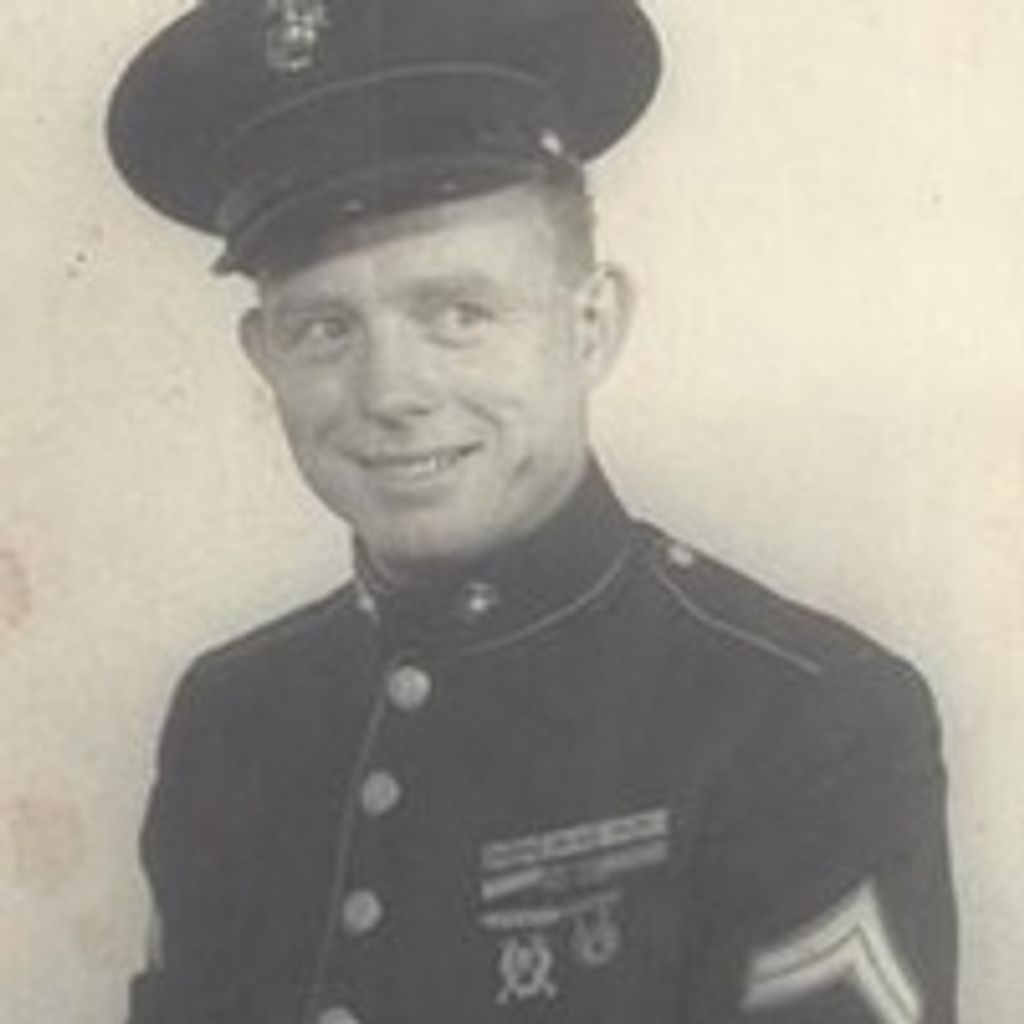
Gordon
Aug 21, 1919 — Jul 9, 2017
Byron Carroll Gordon's Obituary
Byron C. Gordon, 97, of Oklahoma City, OK, beloved husband, father, grandfather, great-grandfather, brother, uncle and friend to many, died Sunday, July 9, 2017 at home after a sudden decline in health. He was born at home in Maryville, MO to Fannie and Morris Gordon on August 21, 1919.
Shortly before his first birthday, Byron experienced the first of many life challenges with the death of his mother, Fannie. For the next two and a half years, Byron lived with his father, Morris, near Minco, OK. In 1923, Morris died of pneumonia leaving Byron left to be raised by extended family members. Byron lived a short stint with his step-mother, Addie Stokes, but the majority of his formative years were spent in the home of his maternal grandparents, Otis and Mary Joslin Lacy. Unfortunately, Otis died in 1925 shortly after Byron moved into their home. Mary left a very positive and profound mark upon Byron. She laid the groundwork for values that included hard work, clean living, loyalty, honor and a deep appreciation for family and nature. As was common during the beginning of the Great Depression, Byron and Mary lived with Arthur (Fannies younger brother) and Mineola Lacy. Upon the death of Mary, Byron continued to live with Arthur and Mineola and their growing family of seven children.
As Byron became of age, his love of baseball and the family farm kept him busy. While only in Junior High School, Byron was known by all of the other country schools boys and coaches as the "big red-headed kid with the blazing right handed fast ball. Byron learned to pitch "fast pitch softball style" and would often leave his good friend and catcher, Pat Mooney, wishing for a thicker catchers glove! Fairview school became known for the Gordon-Mooney combo.
Byrons strong physic and frame was something that garnered attention for him from time to time and the Civilian Conservation Corps needed young men like Byron for different conservation projects across the Country. As a teenager, Byron was sent to the Grand Canyon in northern Arizona where he worked for several years, receiving shelter, clothing, and food, together with a small wage of $30 per month ($25 a month had to be sent home to help support Arthurs family). At the Grand Canyon, Byron learned to operate heavy machinery include bulldozers, heavy cranes, trucks and half-tracks. It was here that he met an influential man named Nick Duncan that would give Byron a taste of respectful male authority that Byron carried into his military service with the US Marine Corps. Byron would often share a story of a time when he was responsible for grading a road near the rim of the Grand Canyon. It had been raining and he had been forced to walk on the muddy road. When Byron mounted his bulldozer and went to engage the foot pedal clutch, his foot slipped off of the clutch. Thanks to his quick thinking, Byron steered the edge of the dozer 180 degrees around quickly just as the nose of the dozer edged over the rim of the canyon. Duncan, who had witnessed the whole incident, came running up to Byron yelling, "Gordon! What are you doing!!" Byron thinking that Duncan was solely concerned about the dozer replied, "I wasnt gonna let the dozer go over." Duncan replied, "I dont give a da*# about that dozer, I care about you son!" Because of the lack of positive male influences in his life, Nick Duncan and his influence gave Byron confidence.
Once his service with the CCCs was over, Byron went back to Oklahoma. He worked as a farm hand and at Bartons Machine Shop in Chickasha completing mechanical overhauling on all types of cars. It was one of those Autumn days when Byron was in Chickasha picking up supplies for Grover McComass farm that he came into contact with a sharp dressed man who told him that he would make a great Marine. Byron signed up that day in October, 1940. Byron left on a train for USMC basic training in San Diego. In basic training, Byron received all of the cursory training that the Corp required but he also received specialized training in marksmanship and intelligence.
Byron was assigned to Marine Barracks at Cavite. At the Cavite Naval Yard was located the 1st Separate Marine Battalion. This was the largest Marine Unit in the Philippines. It was formed at the Cavite Naval Yard on May 1, 1941 when Marine Barracks Cavite was formally disbanded in order to create the new battalion. Byrons commanding officer in Company B, Battery A was Lt. William Hogaboom. Following Hogaboom would prove to be a hard task for Byron because the Lieutenant always seemed to draw some of the most difficult assignments during the initial phases of the war. Hogabooms unit was transferred to Bataan and were responsible for the manning of anti-aircraft positions around the naval base. As the battle on Bataan raged and the American and Philippine defensive lines continued to crumble due to soldiers dealing with malnutrition and tropical disease, Byron and 150 of his Marine and Navy buddies surprised nearly 300 Japanese soldiers that were trying to flank American positions with devastating fire power at the Battle of the Points.
As Bataan fell to the Japanese in April, 1942, Byron attempted to swim from southern Bataan to Corregidor, still under American control. In all, nearly 200 American soldiers attempted to swim the channel between southern Bataan and Corregidor. The challenge for Byron was that the waters around the Philippines were known for sharks - aggressive types such as the Great White and Bull Sharks. As Byron swam further and further to escape the bullets of the Japanese, he found himself being pursued by a shark. As Byron began to tire, a porpoise came to his rescue by driving off the shark and giving Byron a "ride" to Corregidor.
Once rescued by friendly troops on Corregidor, Byron was absorbed into the 4th Marines and given assignment to assist with beach defenses. During the next month Byron and his buddies were witnesses to the heaviest artillery bombardment in all of WWII as the Japanese sought to bring the Americans to submission. On May 6, 1942, General Jonathan M. Wainwright surrendered Corregidor and the fortified Islands to Japan. Byron, along with the other Americans, were marched through the streets of Manila on their way to POW Camp Cabanatuan where horrible atrocities were committed against the Americans by the Japanese. The forced marches to the POW camps were known as the Bataan Death March.
Byron survived heavy labor at Camp Cabanatuan and, in November, 1942, was deemed fit enough to be placed on a work detail in Manila where he remained until his transfer to mainland Japan aboard the "Hellship" Nissyo Maru in July, 1944. The month long voyage, packed into the cargo holds of ships where temperatures soared to over 120 degrees with no air movement, was more than many of the soldiers could bear. Many men, driven out of their minds by the heat and thirst, slit their own wrists and killed others in order to drink the blood. Byron was transferred to a high-altitude slave labor camp to work in lead and copper mines owned by Mitsui Mining Company. During the winter of 1944/45, Byrons camp received over 30 feet of snow. Many soldiers succumbed to the freezing temperatures, but Byron held on. One day in August, 1945 as the American POWs were getting ready to be marched to the mine, their Camp Commandant told the Americans that there would be no work that day. The war was over.
After recuperating Stateside, Byron was shipped back to Oklahoma City. He immediately went to the Lacy farm house where he was given a heros welcome. Not long after arriving back in Oklahoma, Byron was introduced to a beautiful young brunette by the name of Verva Jean Swafford. Despite their short courtship and 10 year difference, Byron and Verva were married in June of 1946. Ten months later, in April, 1947, the first of their four children was born Carol. Three boys followed Carol: Jim in 1950, Jerry in 1952 and Joe in 1953.
As Byron continued to adjust to life free from the haunting memories of captivity, he found solace in his young wife and family. Byron finally had the family that he had longed for years. He worked hard and provided a good life for his family. Byron held jobs in security, defense contracting, mechanics and law enforcement.
Byron retired from Tinker Air Force Base where he worked as hydraulic mechanic. Following his "retirement" the family opened a service station in Noble, Oklahoma. After selling the successful business, Byron and Verva moved to a beautiful log cabin in Custer County Colorado, where he would serve as a deputy sheriff. As Byron and Vervas children began to grow up and have families of their own, Byron began to experience the joys of being a grandparent and great-grandparent.
As of today, Byron and Verva have 51 children, grandchildren, and great-grandchildren - although the number of those who would refer to him as their "Pepa", is much higher. To have known Byron was to love him and his affable spirit. He lived to help and serve.
Byron loved to hunt and fish and do anything that allowed him to be in the mountains of Colorado. He loved his home state of Oklahoma. He loved and often professed great love for his Country. He could often be heard saying, "Whats wrong with those people Dont they know that they are living in the best Country in the world!!" He loved to travel with Verva to the Texas Gulf Coast where they "wintered" at Port Aransas in their motor home. He was a huge fan of all sports, especially those played by his family. He spent many hours and traveled many more miles watching little league baseball and soccer games, high school football games and soccer matches. He rarely missed any band, music, drama or social event where he could cheer on his kids and their families. He could always be counted on for bone-crushing hugs, bone popping hand-shakes and overall intimidation when one of his granddaughters met a new boyfriend or got married.
Byron was preceded in death by his Father and Mother, Morris and Fannie Gordon; daughter-in-law, Gail C. Gordon; grandson, Aaron Higbee; brother-cousins, Charles Lacy, Don Lacy and Kenneth Lacy. He is survived by his wife of 71 years, Verva Jean; daughter, Carol; sons, Jim, Jerry and Joe; as well as many loving grandchildren, great-grandchildren, nieces, nephews, in-laws and friends.
A celebration of Byrons life will be held Friday, July 14, 2017 at 10:00am at Mercer-Adams Chapel, Bethany, OK. Graveside services will follow at Evergreen Cemetery, Minco, OK.
Funeral Service
Friday, July 14, 2017
10:00 AM Mercer-Adams Chapel
3925 N. Asbury
Bethany, OK 73008
To send flowers with our preferred florist or plant a memorial tree, please visit our flower store.
Byron Carroll Gordon's Guestbook
Visits: 0
This site is protected by reCAPTCHA and the
Google Privacy Policy and Terms of Service apply.
Service map data © OpenStreetMap contributors